
 SPECIAL PROGRAMMES
Programmes That Shape
What Schools Become.
Career Counselling & Guidance Programme
Helping Every Student Find Their Direction — Before They Lose Their Way
Most students reach Class 10 without a clear answer to one of the most important questions of their lives — What should I do next? Not because they lack potential. But because no one has helped them look inward carefully enough to find it.
At Devsh, we believe career guidance is not a one-time conversation at the end of school. It is a structured, science-backed journey that begins early — and gives every student the clarity, confidence, and direction they need to make choices they are proud of.
What Makes Our Programme Different
Comprehensive Psychometric Assessment Platform — Mennta Skills
We do not hand students a list of careers and ask them to pick one. We use a comprehensive psychometric assessment platform — Mennta Skills — that has already been successfully implemented across schools in India and internationally.
Deep, Personalised Assessment
Every student goes through a deep, personalised assessment that looks at who they truly are — not just what they score in exams.
Already implemented across:
Delhi Public School, Mumbai · Beacon Group of Schools, Muscat · Indian Community School, Kuwait · Nirmala Niketan PU College, Mumbai · Vidya Bharati English School, Bangalore · Shraddha Children's Academy, Chennai · And many more
What the Assessment Covers
Career Personality
We identify how a student naturally thinks, makes decisions, interacts with the world, and prefers to work. Are they an introvert or extrovert? Do they lead with feeling or logic? Do they thrive with structure or flexibility? Understanding personality is the first step to finding the right fit.
Career Interests
We measure six broad interest patterns — Artistic, Social, Realistic, Enterprising, Conventional, and Investigative — to understand what genuinely excites and engages the student. Career choices aligned with real interest are the ones that last.
Career Motivators
What does the student value most in their future work? Creativity? Adventure? Structure? Independence? Helping others? We map these motivators so that the careers we recommend are ones the student will actually want to wake up for.
Learning Style
Every student learns differently. We identify whether they are a kinesthetic, visual, auditory, or read-and-write learner — and use this to recommend study strategies and learning environments that help them perform better right now, not just in the future.
Skills & Abilities
We assess eight core skill areas — numerical, logical, verbal, administrative, spatial and visualization, leadership, social, and mechanical abilities — to build an honest picture of where the student's natural strengths lie and where focused development will make the biggest difference.
Career Clusters & Path Recommendations
Based on all of the above, we identify the student's top career clusters and generate a ranked list of recommended career paths — matched to their personality, interest, motivators, and skills. Each recommendation comes with a clarity rating and a clear explanation of what that path involves.
Subject Stream Recommendations
We translate career direction into an immediate, practical decision — which subject stream to choose after Class 10. Humanities, Commerce, Science Bio, or Science Maths — the recommendation is grounded in the student's data, not assumptions.
What Every Student Receives
Every student gets a detailed, personalised Career Report — a clear, readable document built entirely around that individual student. Not a generic printout. A real plan.
For Schools — What We Offer
We work with schools to integrate this programme into their existing academic and pastoral framework. Our support includes:
Group Assessment Sessions
Structured assessment sessions conducted with students in school — organised, smooth, and easy to integrate into the school calendar.
Individual Report Reviews
One-on-one sessions where each student's report is walked through with them — helping them understand what it means and what to do with it.
Parent Briefing Sessions
Parents are a critical part of any career decision. We conduct briefings that help parents understand their child's profile and support them — rather than steer them — in the right direction.
Trained Counsellor Support
We work with school counsellors and class teachers to help them understand and use the reports effectively — building the school's own capacity to guide students over time.
Ongoing Career Guidance Systems
Beyond the one-time assessment — we help schools build career guidance as a continuous thread through a student's journey, from Class 8 onwards. So that by the time big decisions arrive, students already know themselves well enough to make them confidently.
The Brain Lab Programme
Teaching children how to learn — not just what to learn.
A structured, science-backed curriculum that develops memory, critical thinking, creativity, communication, and self-directed learning — from the inside out. Designed for schools that believe academic results are only one part of a child's story.
WORLD RECORD
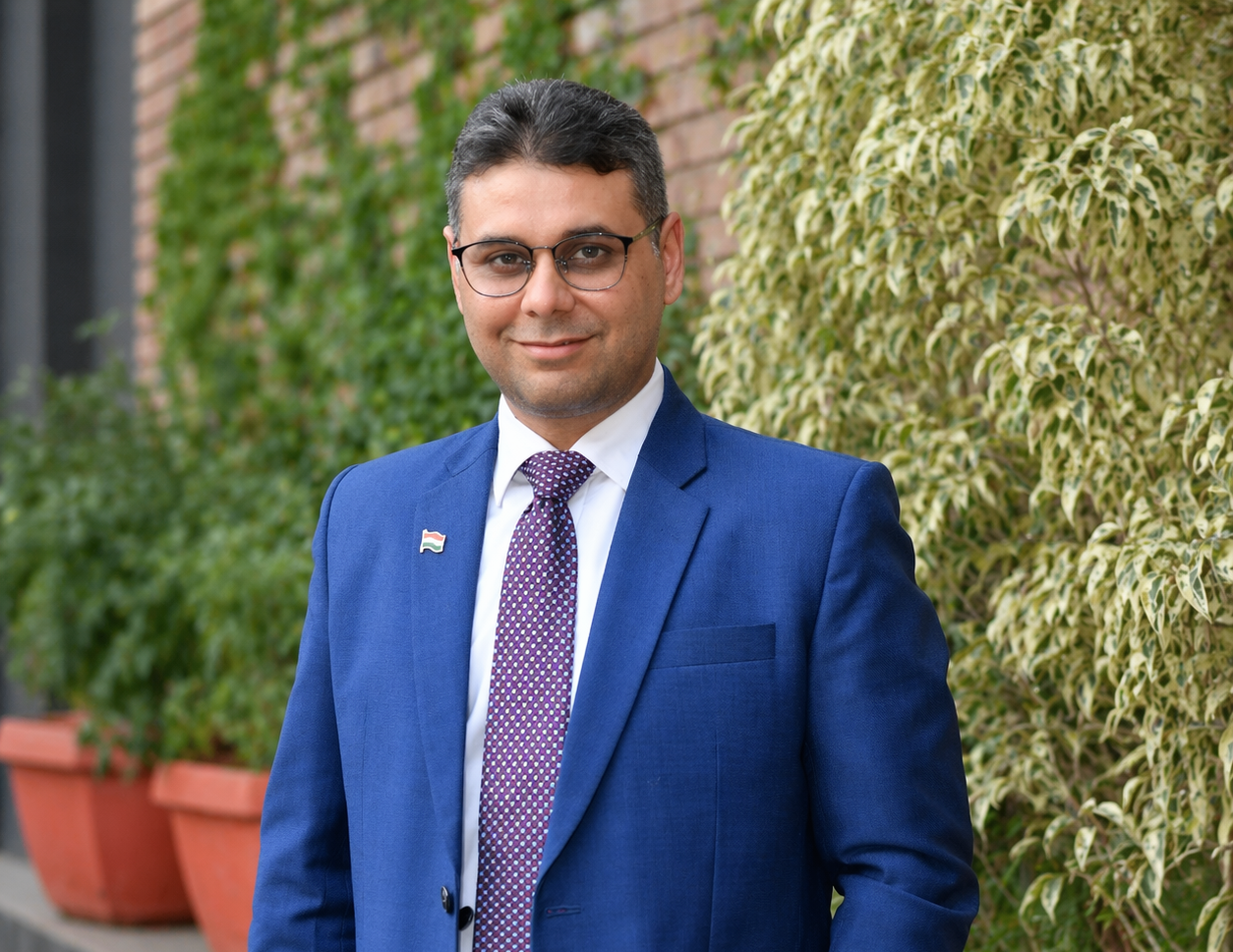
Dr. Sachin Khullar
Brain Science Coach, internationally certified Memory & Mnemonic Trainer, and Founder of Mennta Skills — holds the Guinness World Record for the Largest Memory Lesson ever conducted for students. He brings that same science, energy, and proven methodology directly into your school through the Brain Lab programme.
4
Curriculum themes per grade
30+
Sessions per academic year
100%
NEP 2020 aligned
Most schools teach children what to learn. Very few teach them how.
A child can sit in a classroom for twelve years and still not know how their own brain works. They do not know why they forget things the moment they put the book down. They do not know how to stay focused, manage their emotions while studying, or choose the right learning strategy for a task. They simply try harder — and hope it works.
The Brain Lab changes that. It gives children a working understanding of their own mind — and the practical tools to use it better. Every single day.
Four themes. One complete learning transformation.
The Brain Lab curriculum is structured into four progressive themes, each building on the last — moving from understanding the brain, to mastering memory, to developing thinking and communication, to becoming a self-directed learner.
The Thinking Engine
Understanding the brain and how learning actually works — building the foundation for everything that follows.
- The magical network called BRAIN
- Neurobics — brain flossing & flexing
- Attention, focus & distraction
- Introduction to memory
- Creativity — brain imagination power
- Association — connecting ideas
- Focus, Fit & Fun with Tangramas
- Reflection & HPC Review
Learning by Design
Mastering memory through proven mnemonic tools — so children stop forgetting and start truly understanding.
- Why does my brain forget what I learn?
- PMS — Personal Meaning System
- Application in real subjects
- Rhyme Method
- Shape Method
- Chain Method
- From learning to read → reading to learn
- Reflection & HPC Review
Thinking in Action
Developing communication, critical thinking, and creative expression — the skills that matter beyond the exam hall.
- Art of learning language
- Reading & comprehension skills
- Listening & note thinking
- Public speaking
- Thinking before writing
- Asking better questions
- Shark Tank — creative ideation
- Reflection & HPC Review
The Self-Driven Learner
Building the habits, emotional intelligence, and metacognitive skills that turn children into lifelong, independent learners.
- Goal setting for learning
- Prioritisation & time awareness
- Positive learning habits
- Managing emotions while learning
- Choosing the right learning strategy
- Collaboration & peer learning
- My Learning Journey — reflection
- Reflection & HPC Review
Real outcomes. Visible in the classroom from week one.
MEMORY
Techniques that actually work for real subjects.
FOCUS
Ability to shift from distraction to deep work.
CREATIVITY
Using imagination as a learning and thinking tool.
CRITICAL THINKING
Asking better questions and analysing information.
COMMUNICATION
Speaking, listening, reading, and writing with purpose.
SELF-AWARENESS
Understanding their own learning style and strengths.
EMOTIONAL REGULATION
Managing stress and emotions during learning.
INDEPENDENCE
Setting goals and taking ownership of learning.
Fully aligned with what the National Education Policy asks for.
Structured, trackable, and easy to integrate.
The Brain Lab is not an add-on. It is a structured programme with a clear curriculum, session-by-session delivery plans, and a built-in performance tracking system — the HPC High Performance Check — that gives teachers and parents a real picture of each child's cognitive growth across the year.
Every theme ends with a Growth Analytics & Reflection review — a baseline and progress report that tracks participation, focus, recall, creative effort, emotional regulation, and self-awareness.
The programme is delivered by trained facilitators and supported by Devsh and Mennta Skills — with full teacher orientation, parent communication, and ongoing programme support included.
School Empowerment
Programme
Transforming Every School into a Powerhouse for Academic & Competitive Excellence
The School Empowerment Programme is India's most trusted school-based preparation system for CBSE + JEE + NEET + CUET — designed to transform any school into a recognised centre of academic excellence, without ever taking students away from the school environment.
Every deliverable under this programme is provided in the name of the school — ensuring that the institution itself is positioned and recognised as a premier education hub, building its brand, credibility, and enrolment for years to come.

Mr. Purushottam Singh
One of India's most respected science educators — formerly at Brilliant Tutorials, Bansal Classes (Kota), FIITJEE (Delhi), PACE, and Physics Wallah (Centre of Excellence).
A published author with Arihant Publications, his book Visualize Physical Chemistry For JEE Main & Advanced is widely used across the country for its exceptional concept clarity and exam-focused approach.
Under his guidance, students have secured AIR 1, 2, 7, 17, and 19 in IIT-JEE and NEET — a track record that speaks for itself.
Students Mentored by Puruda Have Secured
AIR 1 · AIR 2 · AIR 7 · AIR 17 · AIR 19
in IIT-JEE and NEET — National Competitive Examinations
One programme. Four examinations. Complete academic coverage.
CBSE +
Board Excellence
JEE
Mains & Advanced
NEET
Medical Entrance
CUET
University Entry
Eight comprehensive deliverables — all in the school's name.
Subject Experts from IITs & NITs
We provide subject experts from prestigious institutions including IITs and NITs — ensuring high-quality academic mentorship and concept-driven learning for students preparing for competitive examinations. These experts work within your school, giving students access to the very best teaching without leaving their institution.
Comprehensive PCMB Study Material
Development of high-quality Physics, Chemistry, Mathematics, and Biology study modules — strictly aligned with NCERT, enriched with advanced-level problems for competitive readiness. All material is developed and provided in the school's name, strengthening the school's own academic identity.
Daily Practice Papers (DPPs)
Provision of Daily Practice Papers after every class to strengthen problem-solving skills and ensure consistent revision. Puruda Classes pioneered this approach — the same discipline and rigour that produced national rankers is now available within your school.
Curriculum Design & Alignment
Development of a robust academic curriculum fully aligned with both the school syllabus and competitive exam requirements — so students never have to choose between doing well in school and preparing for entrance exams. Both happen together.
Assessment Framework — Tests & CBTs
Design and implementation of periodic tests to monitor conceptual understanding and academic progress. Computer-Based Tests (CBTs) are conducted to familiarise students with real exam environments — so that when the actual exam day arrives, there are no surprises.
Student Mentorship & Parent Engagement
Continuous academic counselling to guide students on performance, strategy, and improvement areas. Structured Parent Orientation Programs ensure that families are aligned with the school's academic direction — turning parents into partners in their child's success.
Teacher Empowerment & Training
Academic support and guidance to school teachers for effective content delivery and pedagogical enhancement. The programme does not replace school teachers — it strengthens them, building the school's own internal capacity for sustained excellence.
Performance Assurance Mechanism
Continuous monitoring and strategic intervention to ensure excellence in Board examinations as well as school assessments. Progress is tracked, gaps are identified, and support is adjusted — so that no student is left behind at any stage of the year.
Beyond results — a transformed institution.
A pattern-proof approach — built for real results.
What sets Puruda's approach apart is the concept of Pattern Proof Preparation — students are not trained to answer a specific exam format. They are trained to understand subjects so deeply that they perform well regardless of how the question is framed or how the exam pattern changes.
This is why Puruda's students consistently do well not just in JEE Mains, but in JEE Advanced, school exams, and other competitive examinations simultaneously. The depth of understanding transfers across every context.
With equal emphasis on concept clarity, speed and accuracy, regular testing, and individual student analysis — the programme creates an environment where every student is taught in a group, but tracked as an individual. No student falls through the cracks.
School Audit Service
Before You Fix Anything — You Need to Know What's Actually There
6
Audit Lenses
6
Phases
1
Health Report
360°
Whole-School View
Most schools know something isn't working. They can feel it. In the staff room. In the exam results. In the conversations with parents that keep circling back to the same concerns. What they often don't know is exactly where the problem is — and what is causing it. The Devsh School Audit changes that.
100+
Schools Guided360°
Audit Process95%
Improvement Rate
An honest, expert, whole-school health check.
Six phases. One complete picture.
Entry & Orientation
We begin with a conversation — with the principal, management, and where appropriate, the board. We listen to what the school believes about itself, what it is proud of, and where it feels it is struggling. This shapes our lens, but does not limit it.
On-Ground Observation
We spend time in the school — in classrooms, corridors, the staff room, the front desk, the finance office. We observe without announcing. We talk to teachers, students, admin staff, and parents. We review documents, data, systems, and physical infrastructure. Nothing is off-limits.
Analysis & Synthesis
Everything observed is analysed through six audit lenses — Leadership & Governance, Academic Quality, Teaching & Learning, Student Services, Administration & Operations, and Financial Health. Patterns emerge. Root causes become visible.
The Health Report
We produce a comprehensive, clearly written School Health Report — a document that tells the school's story honestly, identifies areas of strength, flags areas of concern, and provides specific, actionable recommendations for each.
Presentation & Discussion
We present the findings to school leadership — not as a verdict, but as a conversation. Questions are welcomed. Context is added. The report becomes a living document that leadership owns, not a paper that gathers dust.
The Improvement Roadmap
Every recommendation comes with a suggested timeline, a responsible owner, and a way to measure progress. This is not just a report. It is a launchpad.
Every dimension of the school. Examined with care.
Our audit covers every dimension of a school's functioning — not just the parts that are easy to see. Each lens has its own framework, its own evidence sources, and its own set of questions that lead to honest, useful findings.
Leadership & Governance
What we examine:
The clarity of the school's vision and whether it is genuinely lived — or just framed on a wall. How decisions are made and by whom. Whether governance structures are functional or performative. The relationship between management, board, and principal. Succession planning. How the school responds to crisis.
What a healthy school looks like here:
Clear vision owned by every adult in the building. Governance that is structured, documented, and not personality-dependent. A principal who leads with confidence and is supported with clarity. A board that governs without micromanaging.
Common findings:
Vision documents bearing no relationship to daily decisions. Boards that are either invisible or overreaching. Principals drowning in administration because leadership requirements have never been clarified.
Academic Quality & Curriculum
What we examine:
Whether the curriculum is coherent, progressive, and genuinely aligned with the school's philosophy — and with CBSE/IB/NEP requirements. How subjects are planned, sequenced, and connected. Whether assessment is meaningful or mechanical. How the school tracks student progress over time.
What a healthy school looks like here:
A curriculum that has been consciously designed — not assembled from textbooks and habit. Assessment that informs teaching. An academic calendar with rhythm, not just dates. Teachers who know what excellent learning looks like.
Common findings:
Curricula that exist on paper but not in practice. Assessment that measures memory rather than understanding. No coherent thread connecting what is taught in Grade 3 to what is built on in Grade 5.
Teaching & Learning
What we examine:
What actually happens in classrooms — not what is planned, but what is delivered. The quality of teacher-student interaction. Whether lessons are designed for all learners or only for the most able. The level of student engagement and cognitive challenge. How teachers give feedback and whether students use it.
What a healthy school looks like here:
Classrooms where children are genuinely thinking — not just listening or copying. Teachers who ask questions that challenge rather than merely test recall. Learning that moves forward because of what teachers notice, not in spite of what they miss.
Common findings:
High levels of teacher talk and low levels of student thinking. Lessons planned for the textbook rather than the child. Feedback that is abundant but not acted upon. A significant gap between the most and least engaged children in the same room.
Student Services & Wellbeing
What we examine:
How the school looks after its children beyond the academic. Pastoral care systems and whether they actually reach students. Counselling provision. Safeguarding frameworks and whether all staff understand their responsibilities. How the school identifies and supports students who are struggling — academically, emotionally, or socially.
What a healthy school looks like here:
Every child known by at least one adult who notices when something changes. A counselling system that is accessible and trusted. Safeguarding that is not just a policy document but a living culture. Co-curricular programmes that develop real skills — not just fill afternoons.
Common findings:
Pastoral care that exists in name only. Counsellors who spend most of their time on academics, not wellbeing. Safeguarding policies that staff have not read and would not know how to act on.
Administration & Operations
What we examine:
The systems that keep a school running. Admissions processes. HR practices — hiring, onboarding, appraisal, exit. Infrastructure and its alignment with learning. Timetabling. MIS and data management. Communication systems. Whether the school has written SOPs for its key functions, and whether those SOPs are followed.
What a healthy school looks like here:
A school that runs smoothly because systems are clear — not because one person holds everything together. Admissions that reflect the school's values from the first contact. HR that attracts, develops, and retains good people. Data that is used to make better decisions.
Common findings:
Admissions processes that lose families before they enrol. Appraisal systems that are feared or ignored. Timetables built around teacher availability rather than student learning. MIS systems that are expensive, underused, and generating data that no one reads.
Financial Health
What we examine:
The school's financial position — income, expenditure, reserves, and sustainability. Fee structure and its relationship to the school's costs and market. Budget planning processes and how well actuals align with forecasts. Financial governance — who has oversight, what controls exist, and whether reporting is honest and regular.
What a healthy school looks like here:
A school that knows where every rupee goes and why. A fee structure that is sustainable, fair, and reviewed regularly. A budget that is a genuine planning tool — not a document produced once a year and then forgotten. Financial governance that gives the board confidence and the principal clarity.
Common findings:
Schools spending significantly on things that do not serve students while underspending on things that would transform outcomes. Fee structures set by intuition. No reserves. No financial risk awareness. A principal with full academic responsibility but no clarity on financial reality.
One document. The complete story of your school.
At the end of the audit, every school receives a School Health Report — a comprehensive, clearly structured document written with honesty and care. It is not a scorecard. It is not a checklist. It is a genuine account of where the school is, why it is there, and exactly what it needs to do next.
The School's Story
A narrative summary of what the audit found — written to be read and understood, not just filed.
Strengths to Celebrate
Because every school has them. And naming them matters as much as naming challenges.
Areas of Concern
Clearly identified, with the evidence behind each finding. No ambiguity. No vague suggestions.
Root Cause Analysis
What is actually causing each concern — not just what the symptom looks like. This is what makes the difference between fixing problems and repeating them.
Specific Recommendations
For every concern identified, a concrete suggested action. Not generic advice — tailored to this school, this context, this moment.
Priority Roadmap
Recommendations organised by urgency and impact — so leadership knows what to address first, what can wait, and what will have the greatest effect.
Progress Indicators
How the school will know, six months from now, whether things have actually improved. Measurement that means something.
Every school, at every stage.
New School Owners & Founders
Who want to understand the full picture of what they have built — before problems become embedded. A baseline audit early in a school's life saves years of course correction later.
Established Schools
That know something is not working but cannot identify exactly what — or where to start. The audit provides the clarity that internal perspective often cannot.
Schools Preparing for Accreditation or Inspection
Who want an honest independent review before the official one arrives. Far better to find the gaps yourself — and close them — than to be surprised.
School Boards & Trustees
Who need an objective, evidence-based view of how the institution they govern is actually performing. The audit gives boards the information they need to govern with confidence rather than assumption.
Turnaround Schools
That have been struggling and need a clear, prioritised plan to rebuild from a foundation of honest diagnosis. You cannot build a better school on a picture of the school you wish you were.
Curriculum Design Services
Tailor-Made Curricula for Schools That Refuse to Stand Still
Designed for real schools, not just documents.
At Devsh, we design curricula that are built around three non-negotiable beliefs: every child is capable of more than standard curricula ask of them; every school has a unique community that deserves a curriculum shaped to it; and every curriculum must evolve as the world — and our understanding of learning — evolves.
We offer three complete curriculum frameworks — each addressing a different but equally important dimension of a child's education. Together, they cover the full spectrum of what a genuinely excellent school provides.
Three complete frameworks. One stronger school.
Foundational & Preparatory Stage
Whole-brain learning, neuromuscular development, bagless inquiry, thinking ladder, NEP 2020 full alignment
Pre-Primary – Grade 2Computational Thinking & AI
CBSE-mandated CT & AI curriculum integrated into Maths & TWAU — logic, patterns, algorithms, ethical AI
Grades 3 – 5Co-Scholastic Progressive Curriculum
Arts, sports, life skills, STEM clubs, values, student leadership — structured, progressive, assessed
Grades 1 – 8Foundational & Preparatory Stage Curriculum
Our Foundational & Preparatory Stage Curriculum is built around a single truth: the early years are not preparation for life — they are life itself. And they deserve a curriculum designed with the same rigour, care, and ambition as any other stage.
LEFT + RIGHT BRAIN
Both hemispheres activated simultaneously in every session — logic meets imagination, analysis meets creativity.
NEUROMUSCULAR
Movement is a core academic tool — bilateral activation, spatial reasoning, and focused attention built in daily.
BAGLESS LEARNING
Learning through making, exploring, storytelling, movement and reflection — not textbooks and bags.
THE THINKING LADDER — EVERY CHILD CLIMBS UPWARD
Computational Thinking & AI Curriculum
CBSE has officially mandated the introduction of Computational Thinking and Artificial Intelligence across Classes 3 to 8, beginning Academic Year 2026–27, under the theme "AI for Education, AI in Education". For Classes 3–5, this means 50 hours per year of structured CT content — woven into existing Maths and The World Around Us (TWAU) subjects, not taught as a standalone discipline.
This is not a future possibility. It is a current mandate. Schools that are not prepared will fall behind — in compliance, in quality, and in their students' readiness for the world they are entering.
Decomposition
Breaking a big problem into smaller, manageable parts. Children learn that no challenge is too large — it is just made of smaller pieces. Practised through stories, puzzles, and real-world scenarios.
Pattern Recognition
Noticing similarities, trends, and regularities in information. Children who can see patterns can predict, simplify, and find shortcuts. Developed through games, data, nature observation, and Maths.
Abstraction
Focusing on what matters and filtering out what doesn't. A fundamental thinking skill — the ability to see the essence of a problem without being overwhelmed by detail.
Algorithm Design
Creating step-by-step instructions to solve a problem. Children learn to think sequentially and precisely — the foundation of both programming and clear communication.
What AI is and what it is not
AI is a tool built by humans to recognise patterns and make decisions based on data. It makes mistakes. It reflects the biases of the people who built it. Children who understand this become thoughtful users — not passive consumers.
Ethics of AI — Privacy, Fairness & Responsibility
Woven into every AI session is the question: is this fair? Who does this help? Who might it hurt? Children develop the habit of asking ethical questions about technology — a skill that will matter for the rest of their lives.
Unplugged CT Activities — No Lab Required for Grades 3–5
CBSE explicitly supports unplugged learning — CT activities conducted without devices — making this accessible for every school, regardless of infrastructure. Puzzles, card games, physical sorting activities, and storytelling all serve as CT delivery tools.
| Grade | Theme | Core Focus | Key Activities | Hours/yr |
|---|---|---|---|---|
| Grade 3 | The World Around Me | Decomposition + Pattern Recognition | Sorting games, story sequencing, nature patterns | 50 hrs |
| Grade 4 | How Problems Work | Abstraction + Simple Algorithms | Logic puzzles, flowcharts, what-if games | 50 hrs |
| Grade 5 | AI in My World | AI Literacy + All 4 CT Skills | Unplugged AI activities, real-world AI examples, ethics discussions | 50 hrs |
Co-Scholastic Progressive Curriculum
The National Education Policy 2020 is unambiguous: arts, sports, life skills, and values education are not extras. They are core components of a complete education. A child who only knows how to score marks is not an educated child. A child who can think, create, collaborate, lead, and care — that is the goal.
Our Co-Scholastic Progressive Curriculum is a structured, grade-wise framework that takes these dimensions seriously — with clear learning outcomes, progressive skill development, and a real assessment system that goes beyond just 'A/B/C/D' grades.
Visual & Performing Arts
Painting, drawing, clay, drama, music, dance — not as talent shows, but as regular, progressive learning. Every child develops creative expression and aesthetic understanding.
Physical Education & Sports
Beyond PT period. A structured, progressive sports curriculum that develops motor skills, sportsmanship, physical confidence, and an active relationship with the body.
STEM Clubs & Maker Spaces
Structured, progressive STEM activities — science experiments, robotics basics, coding clubs, mathematics exploration. Child-led, teacher-facilitated, inquiry-based.
Life Skills & Social-Emotional Learning
Communication, empathy, conflict resolution, personal hygiene, financial basics, time management, and the art of asking for help.
Values & Character Education
Not preaching — practising. Through service projects, community engagement, ethical dilemmas, and structured reflection, children develop a genuine moral compass.
Student Leadership Development
School councils, prefect training, peer mentoring, and event organisation — real leadership experience from Grade 1 to Grade 8. An opportunity for every student.
| Grade | Theme | Core Focus | Key Activities | Hours/yr |
|---|---|---|---|---|
| Gr 1–2 | Self & Senses | Basic motor, expression, listening, sharing | Movement, drawing, storytelling, group play | Built-in |
| Gr 3–4 | Me & My World | Confidence, communication, teamwork | Drama, sport basics, STEM games, values circles | Built-in |
| Gr 5–6 | Growing Up | Leadership, creativity, social awareness | Clubs, service projects, peer mentoring, performance | Built-in |
| Gr 7–8 | Ready for the World | Strategic thinking, responsibility, initiative | School leadership, community projects, presentations | Built-in |
Curriculum That Lives in Classrooms
Tailor-Made Curricula for Schools That Refuse to Stand Still
A strong curriculum is one of the clearest signs of a strong school. It shapes what teachers plan, what children experience, what parents see, and how learning progresses from one grade to the next.
At Dev’sh, we help schools design curriculum systems that are clear, practical, and classroom-ready. Our work goes beyond writing topics or activity lists. We build structured curriculum frameworks that give leaders a clear academic direction, support teachers with usable planning guidance, and help children connect learning with real life.
We work with schools to create curriculum that is easy to monitor, meaningful to implement, and strong enough to become part of the school’s academic identity.
Five Areas. One Complete Curriculum System.
What We Support Schools With
We support schools in designing, reviewing, and strengthening curriculum so that learning is not left to individual interpretation or isolated classroom practice.
Why Schools Need Structured Curriculum Design
A well-designed curriculum helps schools bring coherence, quality, and continuity into everyday learning.
Our Curriculum Design Code: The 5C Model
Our curriculum design is guided by the 5C Model.
Curriculum Areas We Develop
We support schools in developing curriculum areas aligned to the school’s vision and learner needs.
What Schools Receive
Schools receive practical curriculum support that can be used by leaders, coordinators, and teachers.
- Curriculum framework documents
- Grade-wise learning progression maps
- Assessment guidance
Tailor-Made to the Needs of Your School
Every school is different. Every curriculum we build reflects that.
We do not deliver pre-packaged curricula and leave. We design, adapt, build, train, and stay. Here is what working with Devsh on curriculum design actually looks like:
School Context Mapping
Before a single session plan is written, we spend time understanding your school — its community, its students' starting points, its teachers' strengths, and the values it holds. Urban, semi-urban, rural, English-medium, multilingual — every context shapes what we design.
Curriculum Architecture
We build the full framework — themes, learning outcomes, session sequences, skill progression from grade to grade, assessment criteria, and resource requirements. Structured. Coherent. Complete.
Teacher Orientation & Training
The best curriculum in the world is only as good as the teacher delivering it. We run orientation sessions, build teacher guides, and provide ongoing support — so teachers understand not just what to teach, but why each element is designed the way it is.
Material & Activity Design
We build the actual classroom tools — activity kits, workbooks, reflection journals, assessment tools, and teacher observation formats. Everything a teacher needs to deliver with confidence.
Implementation Support & Review
We stay connected through the year — reviewing what is working, adjusting what isn't, and supporting school leadership with data and insights about student progress across all curriculum areas.
Complete support for design, delivery, and review.
Teacher & Staff
Training Programme
When Teachers Grow, Every Child in Their Classroom Grows With Them
5
Training Domains
25+
Training Programmes
All
Staff — not just teachers
100%
School-context specific
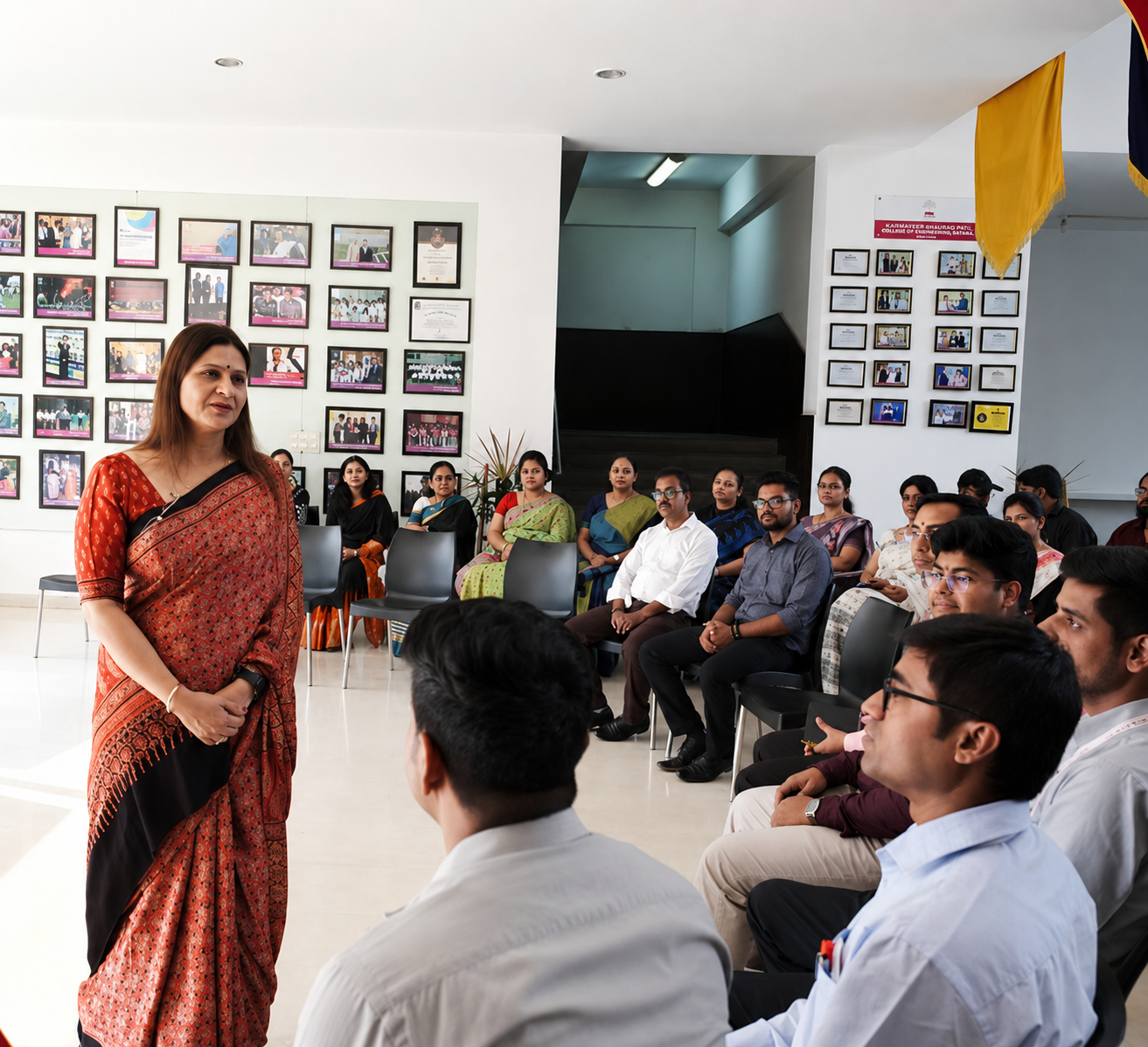
The most expensive thing a school can do is hire a great teacher and then leave them alone to figure everything out.
The most powerful thing is to invest in that teacher — consistently, thoughtfully, and with genuine respect for the complexity of what they do.
Training that actually changes what happens in the classroom.
We Start With Listening — Not Presenting
Before we design a single training session, we spend time in the school — observing, talking to teachers, understanding what is actually hard, what is already working, and what kind of support would genuinely make a difference. Our training is built on that insight, not on a standard catalogue.
We Train in the School's Reality — Not an Ideal World
A training that works for 20 students per class may be useless with 45. A strategy that suits experienced teachers may overwhelm someone in their second year. We calibrate everything — language, pace, depth, and examples — to the actual context of the school we are working with.
We Build Skills — Not Just Awareness
Awareness training says: here is a problem. Skills training says: here is exactly what to do about it, practised until it feels natural. Every session includes demonstration, practice, feedback, and a clear plan for how the learning transfers into the classroom.
We Respect the Teacher's Intelligence and Time
Teachers arrive at training carrying thirty other things they need to do. We honour that. Our sessions are focused, practical, and free of jargon. We never waste a minute. And we never make a teacher feel that their current practice was wrong — only that there is more they can do.
We Stay
Our relationship with a school does not end when the training day ends. We check in. We observe. We support. We adjust. Real change in teaching practice does not happen on a single day — it happens over weeks and months of small, consistent shifts.
Our training programmes do not add to the weight. They reduce it.
The honest truth about teaching is that it is one of the most cognitively demanding jobs a human being can do — and one of the most under-supported. Teachers are asked to manage thirty different children simultaneously, differentiate for wildly different learning needs, assess meaningfully, communicate with parents, navigate administration, and still arrive the next morning with energy and warmth.
We help teachers build systems, habits, and frameworks that make the complex manageable. A teacher who knows exactly how to handle a disruptive child is a calmer teacher. A teacher with a clear feedback system saves hours every week. A teacher who understands how children learn is less mystified when learning does not happen as planned.
The foundation of everything.
How teachers plan, explain, question, and engage — these are the decisions that determine whether a child learns or merely sits in a room. Our pedagogy training makes these decisions deliberate, informed, and consistently excellent.
The Art of Explanation
How to break down complex ideas so that every child in the room understands — not just the quick ones. Techniques for analogy, visual explanation, worked examples, and checking for understanding in real time. The best explanation is the one the slowest learner can follow.
Differentiated Learning in Real Classrooms
Not the theoretical version — the practical one. How to manage a classroom where children are at different levels without needing a separate lesson plan for every child. Grouping strategies, tiered tasks, and the small adjustments that make a big difference to every learner.
Questioning That Builds Thinking
Moving beyond recall questions to questions that genuinely challenge children to analyse, evaluate, and create. How to use silence, how to redirect, and how to turn a wrong answer into the most valuable learning moment in the lesson.
Active Learning Techniques
How to make learning participatory without losing structure or order. Collaborative learning, think-pair-share, peer teaching, and project-based approaches that work in real classrooms — not just in training videos.
NEP 2020 in the Classroom
What the National Education Policy actually requires from teachers — translated from policy language into specific, practical changes in daily teaching. Experiential learning, holistic assessment, and competency-based approaches, made real and manageable.
Assessment as a teaching tool that moves every child forward.
Assessment is one of the most misunderstood aspects of teaching. Most of what passes for assessment in schools is measurement — not learning. Our training shifts this fundamentally, helping teachers use assessment as a teaching tool that moves every child forward.
Assessment for Learning — Not Just of Learning
The shift from summative to formative thinking. How to use assessment as a teaching tool rather than only a measuring tool. Quick checks, exit tickets, observation techniques, and what to do with what you find — so that every assessment makes the next lesson better.
Giving Feedback That Students Actually Use
The research on feedback is clear: most of it is ignored. We train teachers in the techniques that make feedback land — specific, actionable, and delivered at the right moment in the right way. Less writing in margins. More genuine improvement.
Portfolio and Competency-Based Assessment
How to build assessment systems aligned with NEP 2020 that tell a richer story about student growth — beyond marks and grades. Assessment that parents understand, students own, and teachers find genuinely useful in tracking the whole child.
Building the conditions where learning happens naturally.
A classroom that does not feel safe cannot produce learning. A teacher who is constantly managing behaviour is not teaching. Our training in classroom management is not about control — it is about building the conditions where learning happens naturally, and where every child feels genuinely welcome.
Creating a Classroom Where Learning Can Happen
Routines, transitions, and the quiet structures that prevent disruption before it starts. How to build a classroom culture of respect and curiosity — not fear and compliance. The classroom that feels calm is not an accident. It is designed.
Understanding Difficult Behaviour
Every challenging child has a reason behind their behaviour. We train teachers to understand what that reason might be, how to respond rather than react, and how to build the relationship that makes the difference. Behaviour changes when the adult changes first.
Supporting Student Mental Health and Wellbeing
How to recognise when a child is struggling — emotionally, socially, or at home — and what a teacher can and should do about it. Including self-regulation strategies teachers can build into the school day, making wellbeing part of the curriculum rather than an interruption to it.
Inclusive Education in Practice
How to genuinely include children with different learning needs — not just seat them in the room. Practical strategies for learning differences, language barriers, and social-emotional challenges. Inclusion is not a programme. It is a way of seeing every child.
Leadership at every level.
Great schools are not built by great principals alone. They are built by layers of leadership — teachers who lead their classrooms with vision, coordinators who lead their teams with clarity, and professionals who lead their own growth with intention. This training develops leadership at every level.
Mentoring New and Junior Teachers
How experienced teachers can support colleagues who are new to the profession — building the kind of school culture where teachers grow each other. Mentoring is a skill. Observation, feedback, encouragement, and honest conversation — all of it can be taught and practised.
Managing Professional Pressure and Avoiding Burnout
Teaching is emotionally demanding. We build in sessions on professional wellbeing — setting boundaries, managing workload, finding meaning in the work, and sustaining energy over a long career. A teacher who is burning out cannot light a child's curiosity.
The Teacher as a Reflective Practitioner
How to observe your own practice, identify patterns, and make deliberate improvements. Building the habit of professional reflection that the best teachers use throughout their careers. Not navel-gazing — purposeful, evidence-based self-improvement.
Middle Leadership for Academic Coordinators
For heads of department, coordinators, and academic leads — how to lead a team of teachers, manage performance conversations, drive academic improvement, and build a culture of collaborative professional growth across a department.
Everyone in the building contributes to what the school feels like.
A school's culture is not made only in classrooms. It is made at the front desk, on the phone, in the finance office, and in every corridor interaction between a staff member and a child. Everyone in the building contributes to what the school feels like — and everyone deserves to be trained well.
Communication and Parent Engagement
For administrative staff, receptionists, and support staff — how to communicate clearly, warmly, and professionally with parents, students, and each other. First impressions matter. Every interaction with the school is an impression of the school — and these are often the first ones.
Data Management and MIS Usage
How to use school management systems effectively — reducing manual work, improving accuracy, and turning data into information that actually helps decision-making. Less time re-entering the same information in three different places. More time supporting the school.
Safeguarding Awareness for All Staff
Every adult in a school — not just teachers — has a role in keeping children safe. We train all staff in recognition, reporting, and response. Safeguarding is not a compliance exercise. It is a commitment that every adult in the building must own.
School Operations and SOPs
For admin, hostel, transport, and support staff — how to work within clear systems, follow procedures that protect everyone, and contribute to a school that runs smoothly. Every person in the building should know their role, their systems, and why they matter.
Training only works when the school creates the conditions for it.
The most common reason teacher training fails is not that the training was bad. It is that the school did not create the conditions for it to land.
We work with school leadership — principals, academic coordinators, and HR — to build those conditions. Clear communication about why training is happening and what change is expected. Time protected for practice and reflection. A culture where trying something new is celebrated, not judged.
Because training is an investment. And like all investments, it needs the right environment to grow.